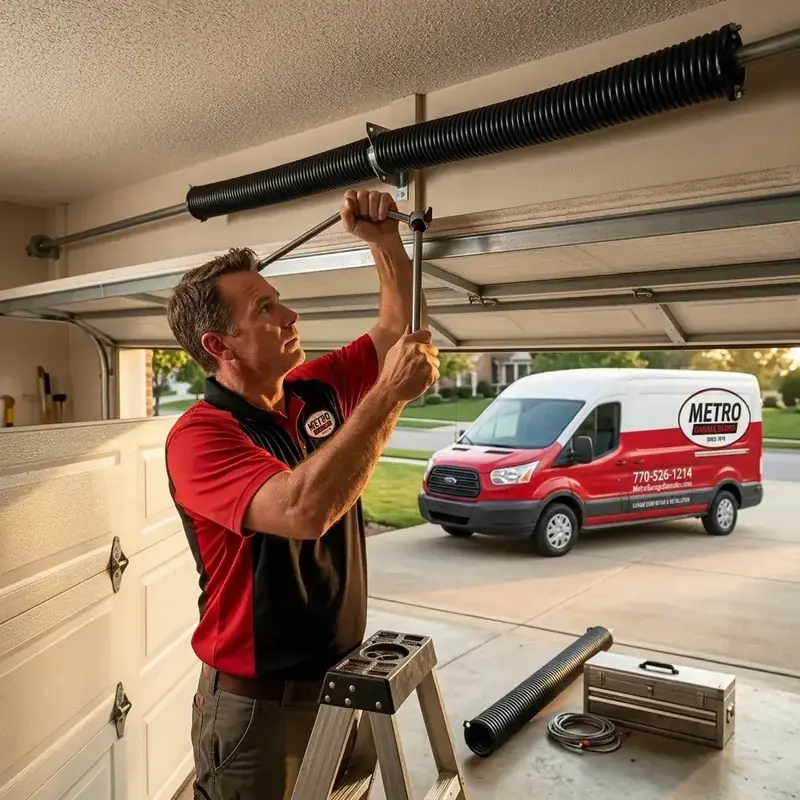
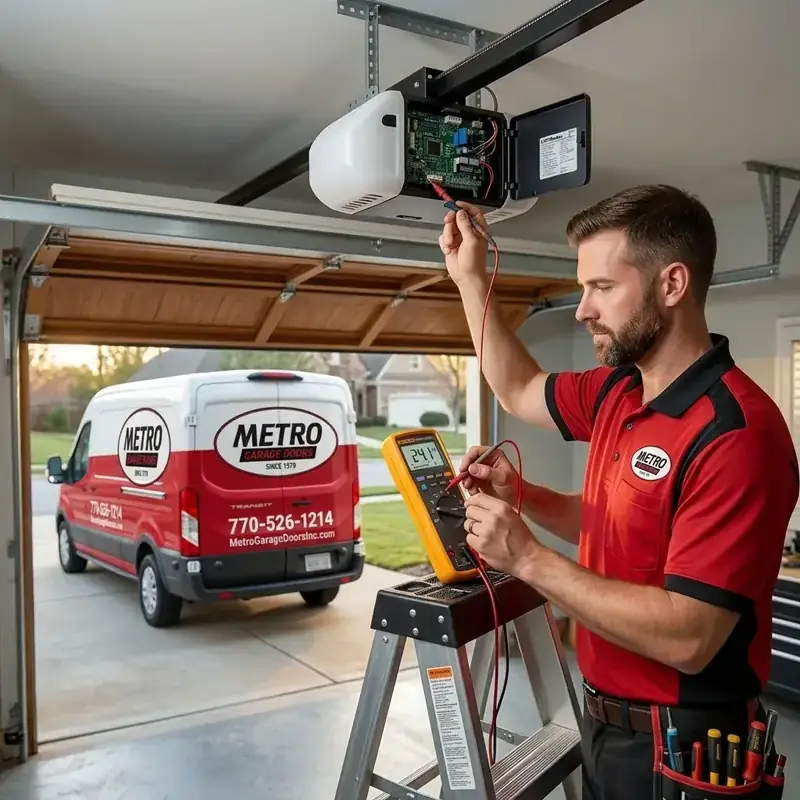
Power outages are the classic reason, but a dead opener, a lost remote, or a logic board that gave up on a Sunday all end at the same red cord. Every automatic opener sold in the US has a manual release, and using it takes about ten seconds when you know the sequence. This guide covers the safe order of operations from inside, both ways in from outside, how to close and lock a disconnected door, how to hook the opener back up, and the one situation where pulling harder is the wrong answer, because the door is telling you a spring is gone.
01The quick answer
- From inside: with the door fully closed, pull the red emergency release cord straight down. Then lift the door by the bottom edge with both hands until it rides fully open.
- From outside: use the side entry door if the garage has one. If not, the round outside key release near the top center of the door unlatches the same mechanism.
- It should feel light. A balanced door lifts with 10 to 20 pounds of effort because the springs do the work. If it feels like dead weight, a spring is broken: stop and skip to section 07.
- Afterward: close the door, then reconnect the trolley (section 06) so the opener works again. Nothing needs reprogramming.
02Before you pull the red cord
The release cord does one thing: it unhooks the door from the opener so the door swings on its own hardware. That is perfectly safe on a healthy, closed door and risky on a compromised or open one, so run this thirty-second check first.
| Situation | Safe to release? | What to do |
|---|---|---|
| Door fully closed, springs intact | Yes | Pull the cord, lift, go. This is the designed use. |
| Power outage, door closed | Yes | Same as above. The opener needs no reset when power returns. |
| Door stuck partway open | Caution | The door may fall when released. Brace the bottom edge, clear the opening, and expect weight. |
| Loud bang beforehand, door feels dead heavy | Release, but do not force the lift | Almost certainly a broken spring. The door can weigh 200 pounds or more with no spring help. Call for a spring replacement. |
| Cable hanging loose, door crooked in the tracks | No | The door is held by whatever has not failed yet. Leave it, keep clear, and book an emergency repair. |
| Car trapped inside, door healthy | Yes | Release, lift, back out, close, and lock the door with the manual slide bar before you leave. |
One more pre-check: know what the cord does in each direction. Pulled straight down, it releases the trolley. On most models, pulled down and back toward the motor, it sets the latch to reconnect. That second position is how you hook things back up later.
03Opening manually from inside
Total time, maybe fifteen seconds once you have done it twice.
- 1. Confirm the door is fully closed. If it is stuck partway, go back one section and treat it as a caution case.
- 2. Find the red cord. It hangs from the trolley on the opener rail, a few feet in from the door, with a T-handle on the end. If it is missing or snapped, the trolley release lever it connects to can be flipped by hand from a step ladder.
- 3. Pull straight down once. You will feel a clunk as the trolley lets go of the carriage. Do not swing on the cord; a single firm pull does it.
- 4. Lift from the bottom edge with both hands. Keep your grip on the face of the panel, not between sections, and lift with your legs. A balanced door goes up smoothly and stays put when fully open.
- 5. Make sure it stays up before walking under it. A healthy door rests open on its horizontal tracks. If it drifts down, the balance is off: hold it, back the car out, and get the door looked at before the next cycle.
04Opening manually from outside
Locked out with the power off is the harder version of the problem, and the answer depends on one piece of hardware your door either has or does not.
- The side door is always plan A. Through the side entry, you are back at section 03 with the red cord in reach.
- Plan B is the outside key release. A small round lock cylinder near the top center of the door face, above the top panel's midline. Turn the key, pull the cylinder outward, and it drags a cable that trips the same trolley latch the red cord does. Then lift from the bottom edge exactly as from inside.
- No key release and no side door? Then the honest answer is that the door is doing its job as a locked entry, and prying at the bottom seal mostly bends panels. This is a service call, and it is also the day to have the key release kit installed so there is no next time.
- A note on renters and shared garages: the key release is keyed hardware. If you do not have the key, the property manager or landlord should, and a locksmith can rekey the cylinder without touching the door.
05Closing and locking a released door
A disconnected door closes the same way it opened: control it by the bottom edge and walk it down. Do not let it free-fall the last two feet; the bottom seal and your toes both prefer a guided landing. Then remember the part outages make people forget: the opener normally is the lock, and a released door is not connected to the opener.
- Use the manual slide lock if the door has one, the spring-loaded bar on the inside edge that shoots into a slot in the vertical track. Most doors have the slot even when the bar was never installed.
- No slide lock? Clamp a pair of locking pliers onto the vertical track just above the second roller. The roller cannot pass the clamp and the door cannot be lifted from outside.
- Never slide-lock a door that is back on the opener. When power returns and someone presses the remote, the opener will grind against the locked door and strip its drive gear. Unlock first, reconnect second.
06Re-engaging the opener
When power is back or the opener is fixed, reconnecting takes less time than the release did, and nothing about your remotes or keypad changes.
- 1. Close the door and remove any manual lock or track clamp.
- 2. Set the latch. On most openers, pull the red cord down and back toward the motor until you hear the lever click into the connect position. Some models skip this step and reconnect on the next run automatically.
- 3. Press the wall button or remote. The trolley travels the rail until it snaps into the carriage with an audible click, then the door moves normally on the next press.
- 4. Or reconnect by hand: on older openers, lift the door manually until the carriage and trolley meet and latch.
- 5. Watch one full open-close cycle. If the door reverses at the floor or stops short, the travel limits need attention, covered in our opener reset guide, and if it strains or slips, stop and have the balance checked.
07When the door will not budge
Everything above assumes the door itself is healthy and only the opener is out of the picture. When a released door still will not lift, or needs your whole body to move, the door is not stuck, it is broken, and the difference matters because the failure modes are heavy and under tension.
- Feels like dead weight: a broken torsion spring. The loud bang you may have heard earlier was the spring letting go. The door now weighs its true 130 to 350 pounds, and lifting it by hand risks your back first and the door second. Spring work is a same-day repair with the sizes and cycle math in our spring chart guide.
- Moves a foot, then jams: a snapped cable or a roller out of its track, letting the door rack sideways and bind. More force bends the tracks. This is off-track repair territory.
- Grinds or screeches the whole way: dry or failing rollers and hinges. If it has never been serviced, start with our lubrication guide and a tune-up before something more expensive follows.
- Opener runs but the door ignores it even after reconnecting: the trolley or carriage may be stripped, or the opener's gear is gone. That diagnosis ladder lives in our won't-open troubleshooting guide.
Metro Garage Doors has been opening stubborn doors across metro Atlanta since 1979, with W-2 techs dispatched same-day from Douglasville and Alpharetta and every repair quoted in writing before work begins. If the red cord did not solve it, (770) 526-1214 will.
FAQ
Is it safe to pull the red cord while the door is open?
Treat it as a no. The emergency release disconnects the door from the opener's carriage, and if a spring is weak or broken, an open door can slam to the floor the moment nothing is holding it. Manufacturers say to operate the release only with the door fully closed. If the door is stuck partway and you must release it, brace the bottom edge, keep every person, pet, and car out of the opening, and expect the door to want to fall.
Does using the emergency release damage the opener?
No. The release is a designed feature, not a workaround. Pulling the cord simply unhooks the trolley from the carriage that the chain or belt drags along the rail. The opener is untouched and your remotes stay programmed. The only way to cause damage is to run the opener repeatedly while the door is heavy or jammed, which is exactly what the release exists to prevent.
How do I open my garage door from outside during a power outage?
If the garage has no side door, you need the outside key release: a small round lock near the top center of the door that pulls a cable connected to the trolley latch. Turn the key, pull the lock cylinder out to release, then lift the door from the bottom. If your door never had a key release installed, that is a ten-minute add-on during any service visit, and it is the difference between getting in and calling for help next time.
Why is my garage door so heavy to lift by hand?
Because the springs are not helping. A properly balanced door feels like 10 to 20 pounds by hand even though the door itself weighs 130 to 350 pounds; the torsion or extension springs carry the rest. If the released door feels like dead weight, a spring has broken or lost tension, and the fix is a spring replacement, not a harder pull. The full weight math is in our door weight guide.
Can I leave the door disconnected and use it manually for a while?
Mechanically yes, and people ride out multi-day outages this way. Two cautions. First, a released door has no automatic lock: slide the manual lock bar or clamp locking pliers onto the track above a roller, or the door can be lifted open from outside. Second, lift with your legs and keep fingers on the flat of the panels, away from the section joints, which pinch.
How do I reconnect the opener after opening the door manually?
Close the door first. On most openers, pull the red cord once more, this time down and back toward the motor, to reset the latch, then press the remote or wall button: the trolley slides along the rail until it clicks back into the carriage on its own. Some older units want the door lifted by hand until the latch snaps in. Full brand-by-brand steps are in our reset guide.
The door will not open manually even after I pulled the release. What now?
Stop lifting. A released door that will not move has a mechanical failure holding it: a broken spring making it too heavy, a snapped cable jamming a track, a roller out of its track, or a bent track pinching the door. Forcing it adds panel and track damage to the bill. Metro runs same-day emergency repair across metro Atlanta with the price quoted in writing before work begins. Call (770) 526-1214.