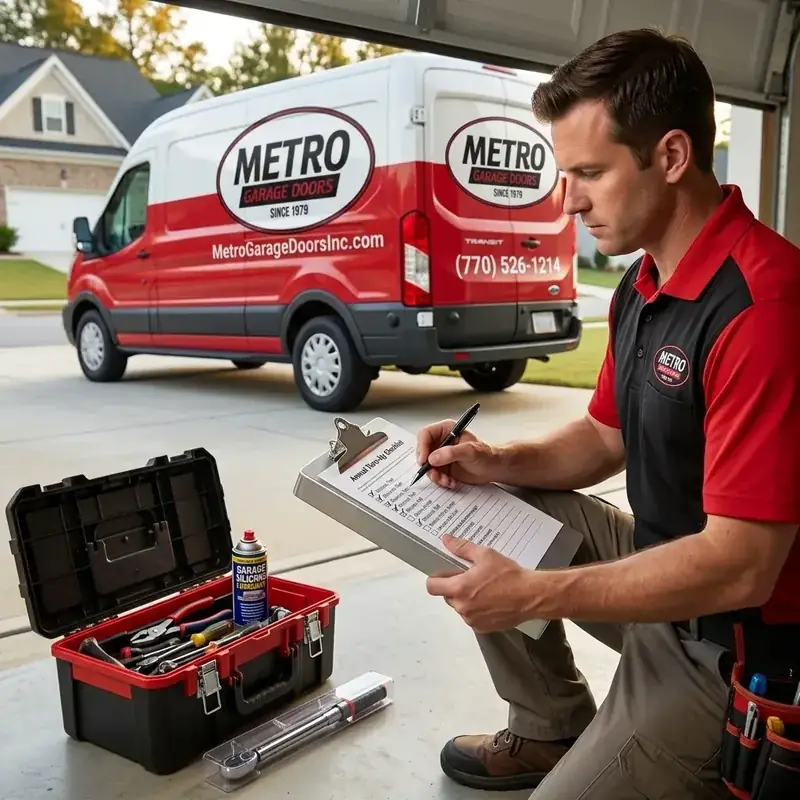
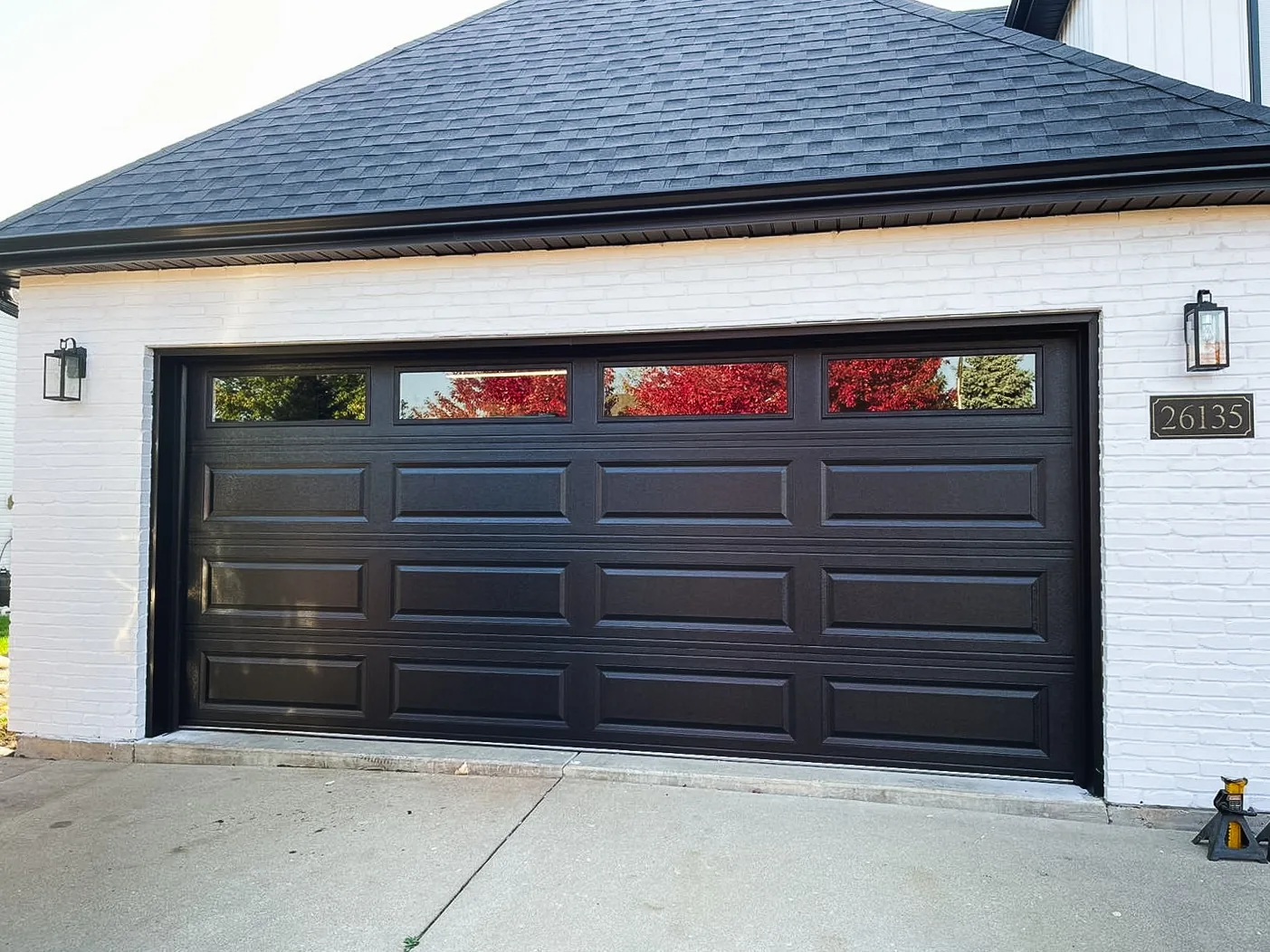
The four systems we inspect. A residential garage door is four interconnected systems: the balance system (springs, cables, drums) that does the actual lifting; the tracking system (rollers, hinges, brackets, tracks) that keeps the door moving in a straight line; the opener system (motor, gear, belt or chain, logic board, sensors) that automates the lift; and the seal system (bottom weather seal, side jambs, top header) that keeps weather and pests out. A tune-up that only addresses one of those is a tune-up that misses 75% of what fails.
What we lubricate (and what we don't). Every hinge pivot, every roller bearing, every spring coil, every opener gear or chain gets a fresh coat of non-residue silicone lubricant. We do not lubricate the tracks themselves, that just collects grit and grime. We do not use WD-40 or general-purpose oil, which evaporates fast and leaves residue. The lube matters; using the wrong product makes the door noisier within months and accelerates wear.
The balance test most homeowners have never seen. With the opener disconnected, a properly balanced door should hold itself open at the halfway mark, neither falling nor lifting on its own. If it falls, the springs are losing tension; if it lifts, they're over-wound. An unbalanced door forces the opener to lift dead weight on every cycle, which is the single largest cause of premature opener-motor burnout. The balance test takes 30 seconds; almost no DIY homeowner ever does it.
Sensor alignment and force calibration. The two photo-eye sensors near the floor have to be in perfect alignment for the door to close, and most are 1–2 mm off after a few years of bumps from kids, lawnmowers, and storage shifts. Misaligned sensors cause the door to reverse mid-close (a "ghost reversal"), which homeowners often misdiagnose as a broken opener. We re-align both sensors and clean the lenses. We also test the opener's force-and-travel calibration, if it's set too aggressive, the door slams; too soft, it reverses on its own weight. Both shorten part life.
What we'll never do. Sell you on a high-pressure "membership" that locks you in. Recommend a "preventive" replacement on a part that has years of life left. Inflate findings to justify the visit. The model is simple: flat fee for the tune-up, written report of every finding, transparent quote on anything we recommend. Your call to approve, schedule, or skip, every time.