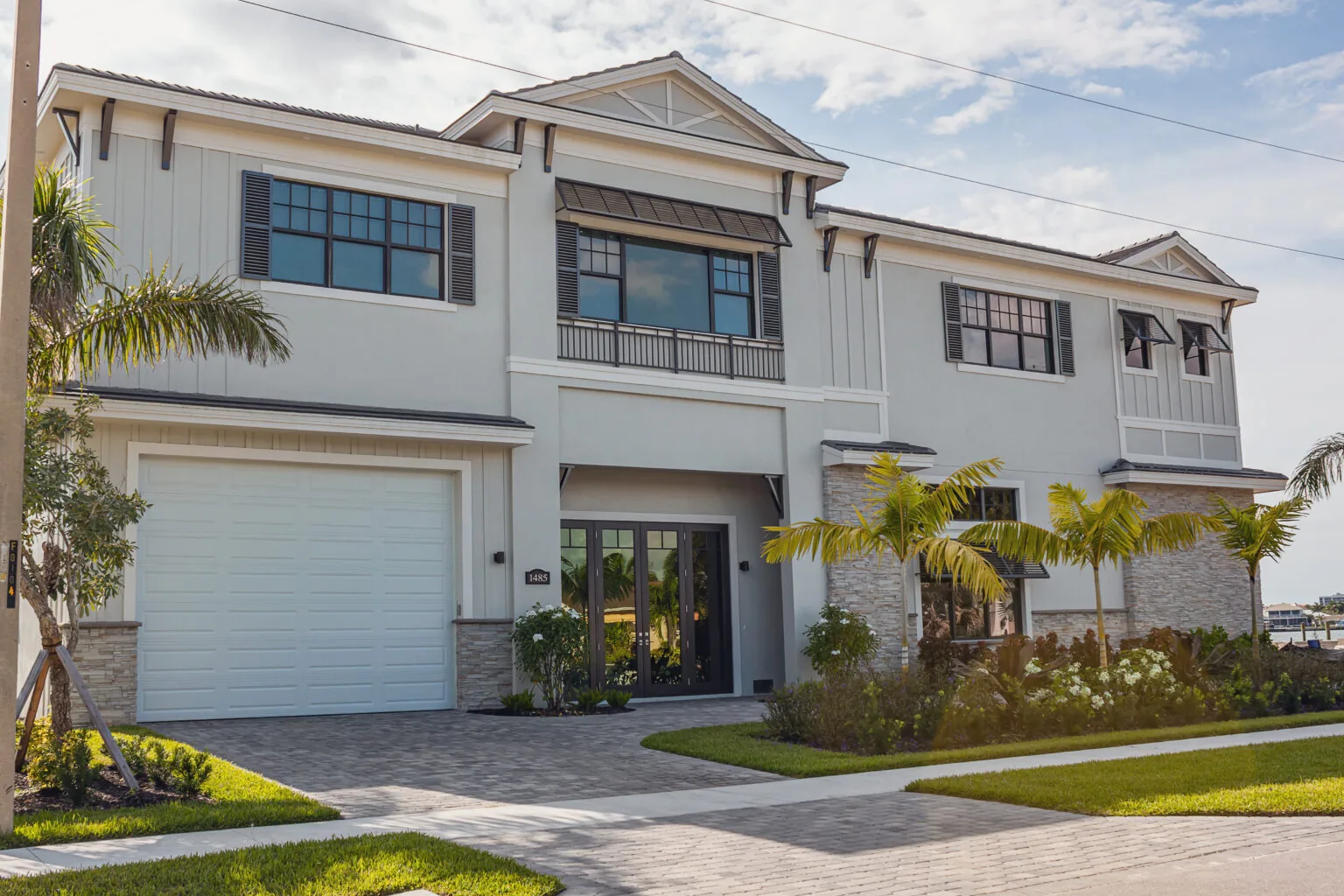
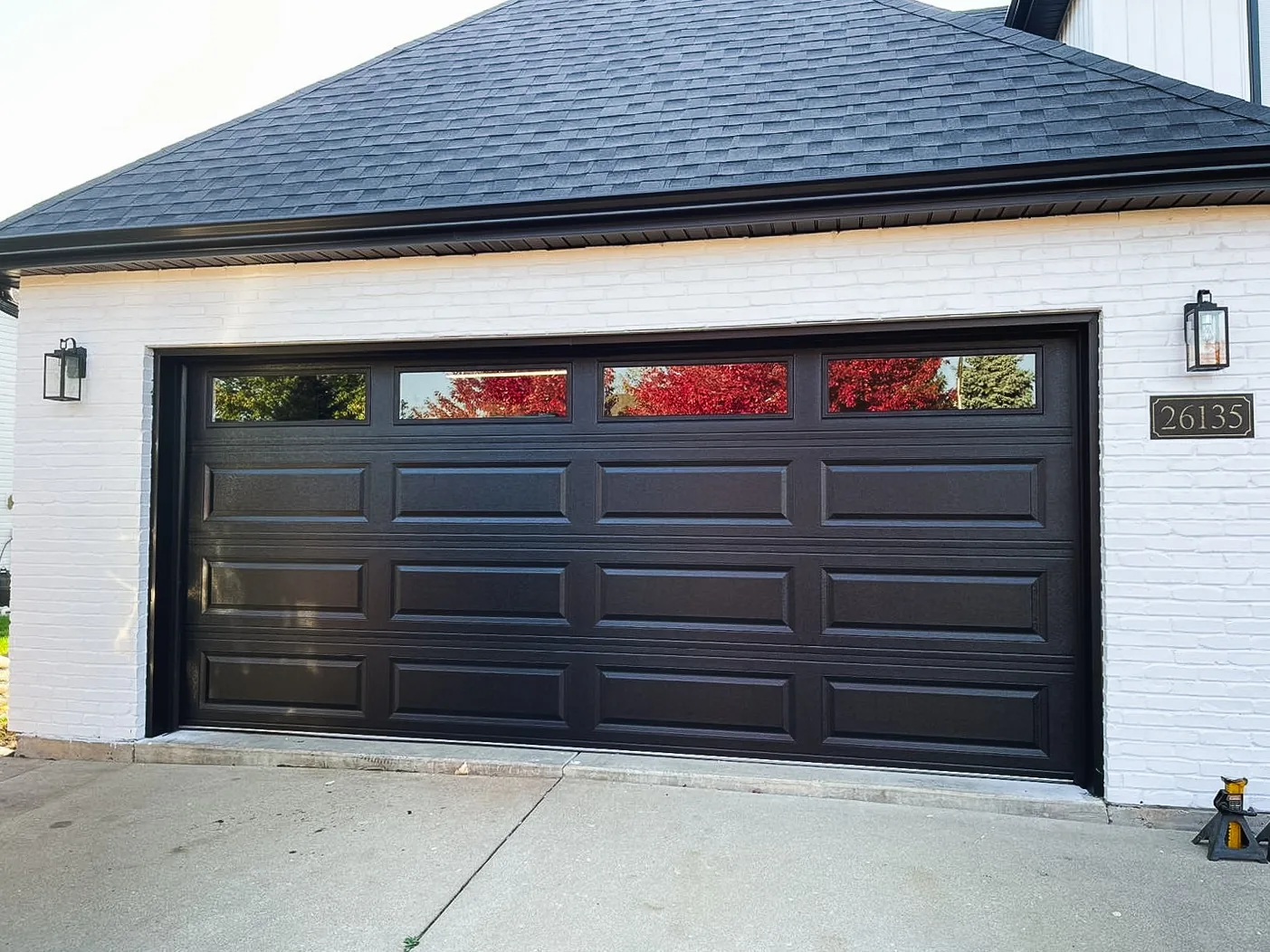
Most homeowners never think about their garage door until it stops working. Then a $4,000 piece of moving equipment, the largest moving thing in the house, suddenly becomes a problem to solve at 7 a.m. on a Tuesday. This guide walks through every part of a standard residential garage door, what each one does, and which failures you can identify before you pick up the phone.
01Panels & sections
Panels (or sections) are the individual rectangular or square-shaped pieces that form the garage door's entire surface. They provide structural support, enable flexibility and movement through hinges, offer insulation and weatherproofing, add aesthetic appeal, and allow for cost-effective repairs when one section is damaged.
Panels rarely fail outright. The common issue is damage from impact, a backed-up car, a basketball, a falling ladder. Dented panels are a cosmetic problem until the dent is severe enough to bind in the tracks. Panel replacement is straightforward when the door is still in production; older doors sometimes need a full replacement because the panel pattern is discontinued.
02Tracks
Tracks are the metal rails installed on either side of the garage door opening. Two vertical tracks run up the door frame and two horizontal tracks run along the ceiling, they guide rollers along a smooth pathway, support the door's weight, ensure safety and stability, reduce friction, and maintain proper alignment to prevent malfunction.
Tracks usually go bad from a single event: the door comes off the track because a cable broke, or because something hit the door while it was opening. They can also gradually loosen, the lag bolts holding the brackets back out 1/8 inch over the years until the track flexes when the door cycles.
03Rollers
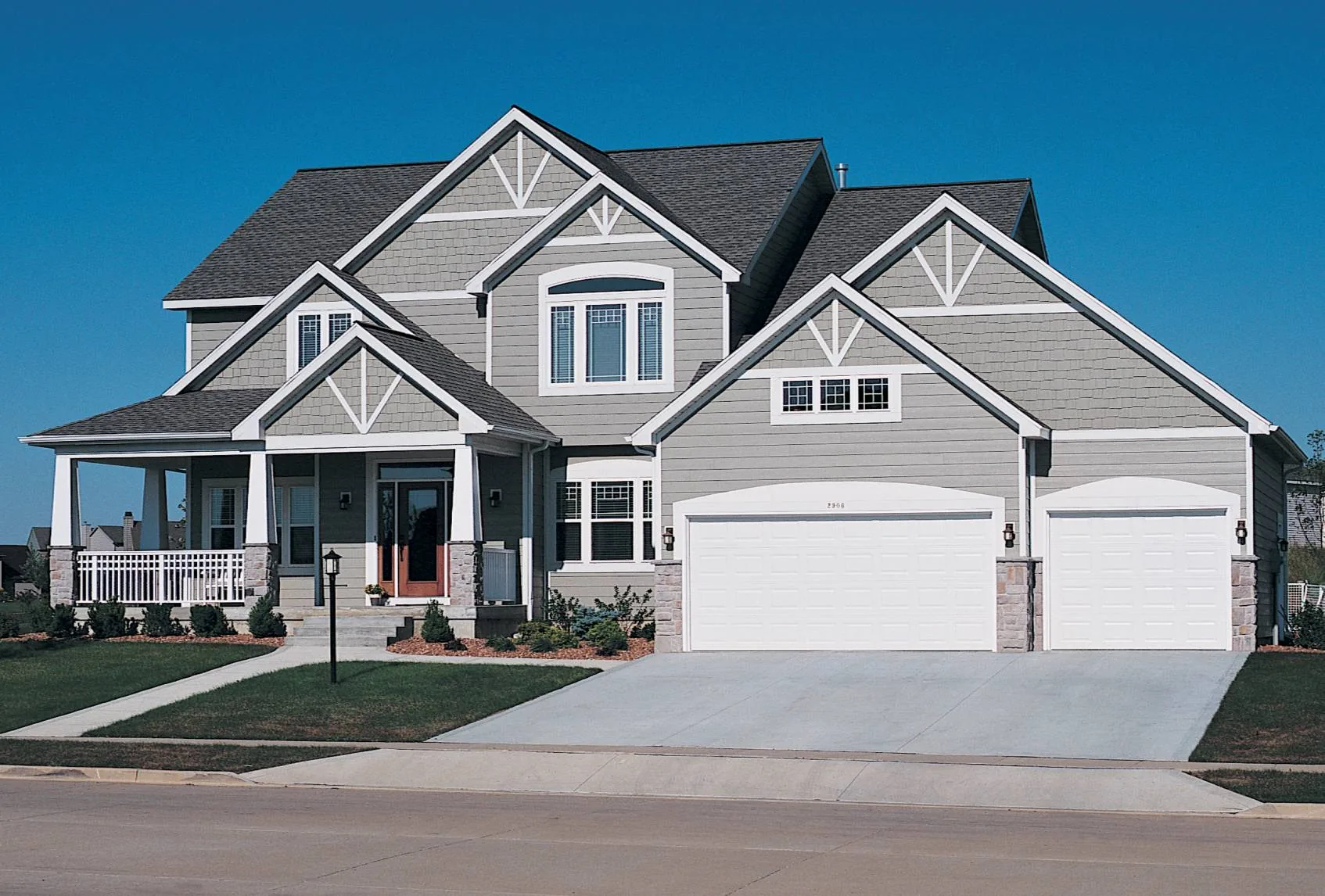
Rollers are the round wheels, made of steel or nylon, that attach to door panels and move along the tracks. They facilitate smooth movement, support the door's weight, reduce noise during operation, and contribute to system durability. They require periodic lubrication and inspection.
Cheap doors come with steel rollers (loud, last 5–7 years). Mid-range doors get nylon rollers with sealed bearings (quieter, last 15+ years). Premium doors and tune-up upgrades use 13-ball-bearing nylon rollers, nearly silent, lifetime-grade. Failing rollers sound like a coffee grinder. Roller replacement for a full set takes a tech about 30 minutes and is a common upgrade during an annual tune-up.
04Springs
Springs counterbalance the weight of the door so the opener (or your hand) only has to overcome friction, not the full 250 pounds. Two main types exist:
- Torsion springs, twist on a shaft above the door. Most modern installations. Last 10,000–20,000 cycles, which is roughly 7–14 years on a door that opens 4 times a day.
- Extension springs, stretch and contract alongside the horizontal tracks. Older or budget installs. Same lifespan range, but they fail less safely; if they break without a containment cable, they can whip across the garage.
Springs counterbalance the door's weight, control movement speed, ease opening and closing, and reduce strain on the opener motor. When a spring breaks, you'll usually hear a loud bang from the garage and the door will be impossible to lift or will slam closed when raised manually. Do not operate the door until the spring is replaced. Spring replacement is the most common service call we run.
05Cables
Cables are long, sturdy metal wires that work alongside springs. They wind around drums and pull or release tension to move the door. Cables fray over time, especially where they wrap around the drum, and a fraying cable is a warning. A snapped cable means one corner of the door drops, the door jams in the tracks, and you usually can't open or close it. Cable replacement is fast for a tech but tricky to do safely with a partially-counterbalanced door.
06Hinges
Hinges are the metal joints connecting door panels. They feature pins that allow flexible bending without compromising security, and regular lubrication prevents rust and squeaking. Numbered 1, 2, 3 (corresponding to the joint between sections 1&2, 2&3, etc.), hinges higher in the door bear more stress and wear faster.
Hinges loosen, the screws pull through the panel, and you start to hear creaking. They're cheap and quick to replace; usually done as part of a tune-up rather than as a single service call.
07Bottom seal & weatherstripping
The bottom seal is a flexible rubber or vinyl strip at the door's base that creates a tight seal against the floor. It blocks dust, dirt, pests, and weather elements while preventing water seepage. Weatherstripping, also typically rubber or vinyl, lines the door and frame edges, creating barriers against rain, snow, dust, and insects, and compresses when the door closes to seal gaps effectively.
Bottom seals dry out, crack, and develop gaps along the edges. The first sign is usually daylight visible at the corners when the door is closed, or water stains creeping up the bottom panel. It usually gets bundled into a tune-up.
08Opener (the motor)
The opener is the motorized device on the ceiling that automates door operation. Modern systems use chain-drive, belt-drive, or screw-drive trolley mechanisms, and reliable operation requires regular maintenance including lubrication and component checks.
Modern openers (LiftMaster, Genie, Chamberlain) include logic boards, Wi-Fi, battery backup, and motion-activated lights. They typically last 10–15 years before the logic board fails or the gearset strips. Opener repair is worthwhile through year 8 or so; after that, replacement usually makes more sense than chasing parts. We've also written a full opener buyer's guide if you're shopping.
09Remote control
Handheld transmitters use radio frequency technology to signal the opener from a distance. Multiple types exist, single-button, multi-button, and keychain variants, and most modern systems use rolling-code RF, while pre-2000 openers use fixed codes that are easy to clone and worth replacing for security alone.
Most remote issues are dead batteries. If a battery swap doesn't work, the remote may need re-pairing to the opener (every brand has a "learn" button on the unit). If multiple remotes fail at once, it's usually the receiver in the opener, not the remotes, see our opener troubleshooting guide.
10Safety sensors
Safety sensors are the small photoelectric devices installed near the bottom of your garage door on either side. They detect obstructions and halt door movement if anything blocks the light beam. Federal law has required them on every residential opener since 1993, and proper maintenance is critical for accident prevention.
If your door opens but won't close (and the opener light blinks 10 times when you press the button), the sensors are almost always the issue. Cheapest fix: wipe the lenses with a dry cloth, then check that both sensors are pointed at each other and showing a steady light.
11Brackets & hardware
Brackets and hardware are the metal pieces and fasteners that secure door components together, track brackets, jamb brackets, top fixtures, bottom fixtures, lag bolts, hex screws. Loose or missing hardware can cause misalignment, vibration, and malfunction, so regular inspection and tightening is part of any proper tune-up.
The red-painted brackets and bolts (top of the cable drums, bottom corner brackets) are under direct spring tension. Don't touch them. Releasing them with the spring still wound has caused fingers, eyes, and worse.
12Locks & handles
Manual locks and handles let you operate or secure the door without the opener, handles allow manual lifting or lowering, and locks (slide bolts that engage the track) prevent unauthorized access. Both require occasional maintenance to ensure functionality.
One important note: if you have an automatic opener and a slide lock engaged, the opener will tear itself apart trying to open against the lock. Most homeowners with openers either remove the slide locks or zip-tie them in the disengaged position.
13Panel inserts & windows
Panel inserts are sections of the door designed to let light into your garage, usually glass or acrylic insets along the top section. They brighten the space, reduce reliance on artificial light, and add curb appeal. Privacy is the trade-off: standard glass shows what's parked inside. Frosted, obscure, or seeded-glass inserts solve that.
"Most calls we run are for one of three things: a broken spring, a misaligned sensor, or a worn-out opener. The other 5% is what makes the job interesting." , Brandon Wilson, Metro lead technician
What wears out first (in our experience)
After 47 years of service calls, the order is roughly:
- Springs (10–14 years), first major failure most homeowners experience
- Bottom seal (5–8 years), almost always needs replacing before springs
- Rollers (5–15 years depending on type)
- Opener logic board (10–15 years), when the system as a whole tips toward replacement
- Cables (10–15 years, often replaced with springs)
- Hinges (15+ years), usually replaced during a tune-up rather than as the primary fix
DIY vs. call a pro
Honest take, after a lot of service calls that started as someone's weekend project:
You can probably handle
- Cleaning sensor lenses
- Replacing remote batteries and re-pairing remotes
- Lubricating rollers, hinges, and the opener rail (use lithium grease, not WD-40)
- Replacing the bottom seal, assuming you can lift the door safely
- Tightening visible screws on hinges and brackets (don't touch the red-painted ones, those are spring tension)
Call a pro for
- Anything involving springs, cables, or the torsion bar
- Door off the tracks
- Panel replacement (lifting heavy steel into a tensioned system)
- Opener replacement (the J-arm geometry has to be set right for the door)
- Anything where you're not 100% sure what you're looking at
The service call to have a Metro tech diagnose it is $0 with any repair. If it's a 2-minute sensor wipe, we'll tell you it's a 2-minute sensor wipe. We've been doing this since 1979, and the family who owns the company still answers the phone.